
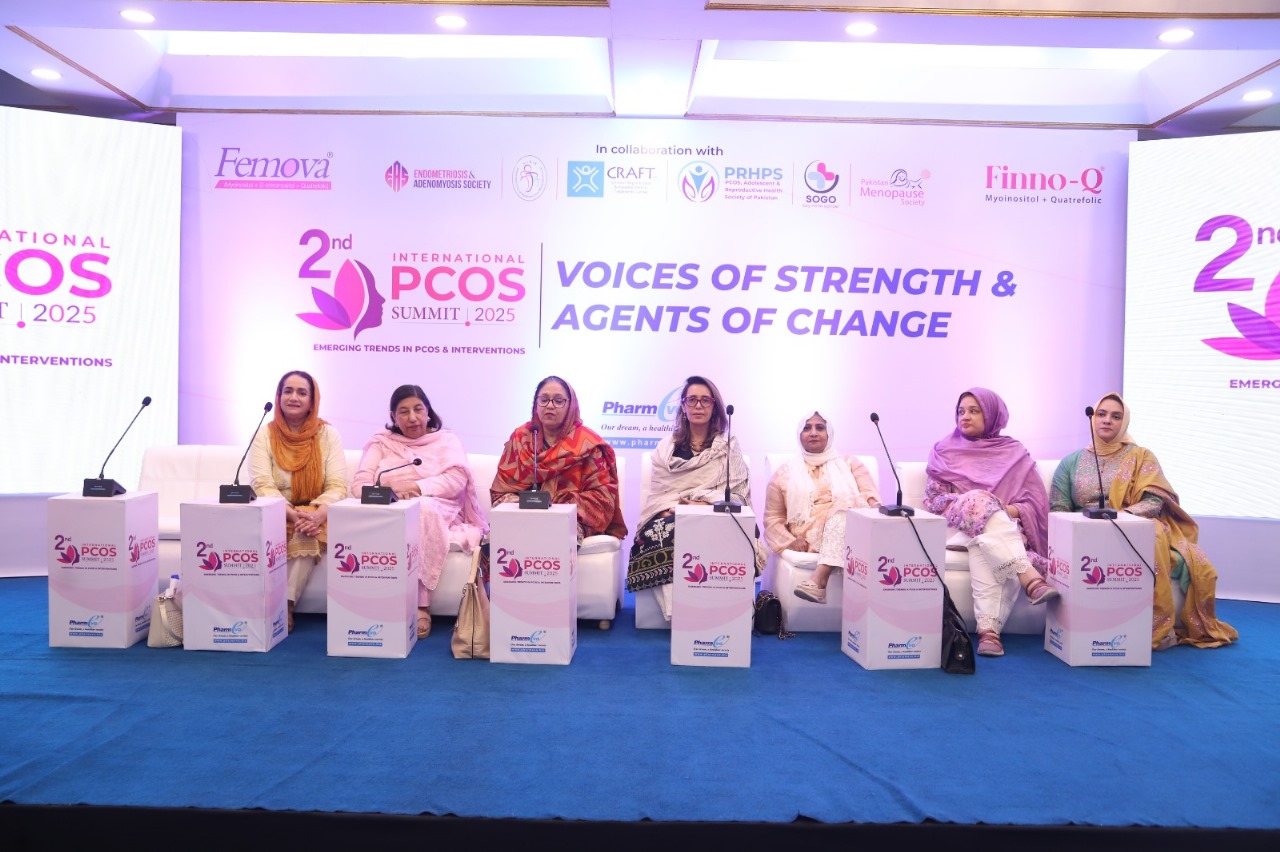
Islamabad (Zahid Yaqoob Khawaja): Of the 52 percent Pakistani women of reproductive age suffering from Polycystic Ovary Syndrome (PCOS), over 80 percent remain undiagnosed — making them ineligible to conceive after marriage and worsening the country’s infertility crisis, experts warned at an international conference held in Islamabad on Thursday.
Held at a local hotel, the conference brought together leading gynecologists, endocrinologists, and global maternal health experts, who expressed deep concern over the alarmingly high prevalence of PCOS in Pakistan — far above the global average of 4 to 18 percent. The reasons, they said, include a combination of genetic predisposition due to cousin marriages, growing obesity among women, lack of physical activity, and widespread ignorance about menstrual and reproductive health.
The event was jointly organized by the PCOS, Adolescent and Reproductive Health Society of Pakistan, the Endometriosis and Adenomyosis Society in collaboration with local firm PharmEvo.
Prof. Dr. Rizwana Chaudhry said the PCOS burden in Pakistan is unlike anything seen in other parts of the world, and most women do not even realize they have it until it severely impacts their reproductive health. “We are seeing a silent health emergency — women unable to conceive, suffering from miscarriages, hormonal imbalances, and metabolic disorders, all rooted in undiagnosed PCOS,” she noted.
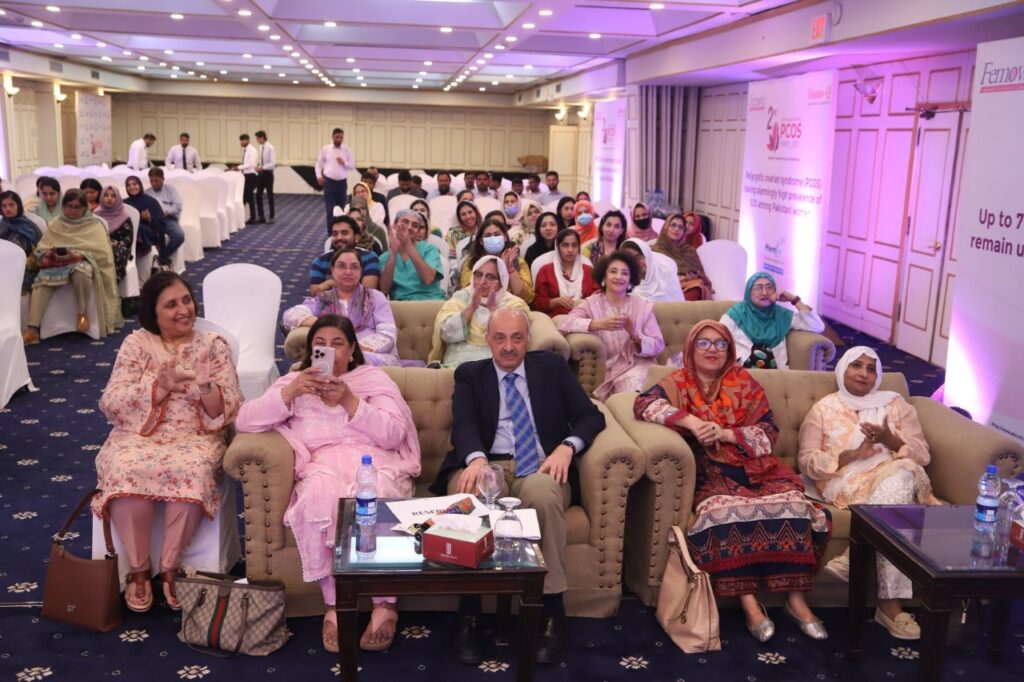
Dr. Ghazala Mahmood emphasized that the disease often remains hidden due to cultural stigma and lack of awareness. “Girls are never educated about irregular periods or facial hair being red flags. These symptoms are ignored until the damage becomes irreversible,” she said, calling for early screening programs in schools and colleges to prevent long-term complications.
Dr. Hani W. Fawzi, Consultant Obstetrician & Gynecologist at South Tyneside NHS, UK, called PCOS a “wicked problem” — one so complex that no single specialty could tackle it alone. “This is not just a gynecological disorder. It demands a multidisciplinary approach involving gynecologists, endocrinologists, dietitians, psychologists, and public health experts,” he said. “We must reach the undiagnosed population through awareness and community-based outreach. Without diagnosis, there can be no care.”
Dr. Fawzi also called for focused research into why PCOS is so rampant in Pakistan, saying cultural, genetic, and environmental factors need to be systematically studied to formulate a national response.
Experts including Dr. Saima Zubair, Dr. Shamsa Rizwan, Brigadier Dr. Mamoona Mushtaq, Dr. Nabia Tariq, Dr. Nosheel, and Dr. Shumaila Tanveer were also part of the expert panel, highlighting the urgent need to prioritize PCOS on the national health agenda.
Brigadier Dr. Mamoona Mushtaq urged that “greater importance must be given to PCOS, as it is silently destroying women’s reproductive and overall health.” She said that myths and stigma around periods and fertility were major barriers to care.
Dr. Nabia Tariq echoed the call for massive awareness campaigns. “Women need to be empowered with the right knowledge about PCOS from a young age. Only then can we hope to reduce the burden of infertility,” she added.
Dr. Saima Zubair said technology would play a key role in early detection and patient support in the future. “Artificial intelligence will soon be used to screen for PCOS, and a dedicated chatbot will be launched by September to help women self-assess and connect with specialists,” she said, adding that early diagnosis and treatment could restore hormonal balance and fertility in many cases.
Nabeel Akhtar, Business Unit Head at PharmEvo, said that PCOS has silently evolved into one of the most neglected yet common health conditions affecting Pakistani women. “We must break the silence around PCOS by creating nationwide awareness and helping women recognize early signs before it’s too late,” he said.
He added that PharmEvo’s goal is to play a proactive role in helping identify the millions of undiagnosed women living with PCOS across the country. “It’s not just about treatment, it’s about awareness, screening, and empowering women to take charge of their health,” Akhtar noted.
The speakers concluded with a joint appeal to health authorities to integrate PCOS education, screening, and counseling into national health programs to protect future generations.